The Architecture of Foot Posture
The Architecture of Foot Posture
Why the shoe you put your orthotic into "changes everything” and what heel pitch, arch contours, midsole firmness, and rocker profile must do together to produce genuine improvements in foot function.
Think of it like building a house
Before we talk about arches, pitch angles, or foam densities, we need a framework, one that makes the relationship between a shoe and an orthotic immediately intuitive. So let's start with construction.
The outsole and midsole - everything that constitutes the shoe beneath your foot - is the land and the foundation slab. It determines the slope of the site. Before a single wall goes up, that terrain dictates everything: the angle of load, where gravity pulls, what "level" even means for that structure.
The orthotic is the house built on top of it. A good architect doesn't design a house in the abstract and then drop it onto whatever block happens to be available. They design it for the terrain - matching the pitch, compensating for the slope, ensuring the structure sits balanced against gravity on that specific site.
"An orthotic is not a universal insert. It is a structure designed for a specific terrain AND the forces acting against that terrain. Change the terrain, and you change its entire function."
When you take an orthotic - however well designed, however precisely scanned - and place it into a flat, zero-drop shoe, you may be placing a house designed for a sloping block onto perfectly flat ground. The walls are still standing. The roof is still on. But nothing is quite level. The load paths are wrong, and the structure works against itself in ways that aren't always obvious until something starts to fail.
| The Building Analogy | The Orthotic & shoe correlates |
| Sloping block or uneven block | Heel pitched midsole or midsole with different densities |
| Flat block | Zero-drop / flat-soled shoe |
| The foundation slab | The midsole - sets pitch, platform geometry and density |
| The house structure | The orthotic - designed for a specific foundation & to resist forces onto that foundation |
| Interior decor | Top-cover, padding, fine-tuning materials |
Heel pitch: the slope of the block
Heel pitch - the elevation differential between the heel and forefoot - is one of the most consequential variable in orthotic footwear design. Yet it is routinely treated as a stylistic choice rather than a biomechanical specification.
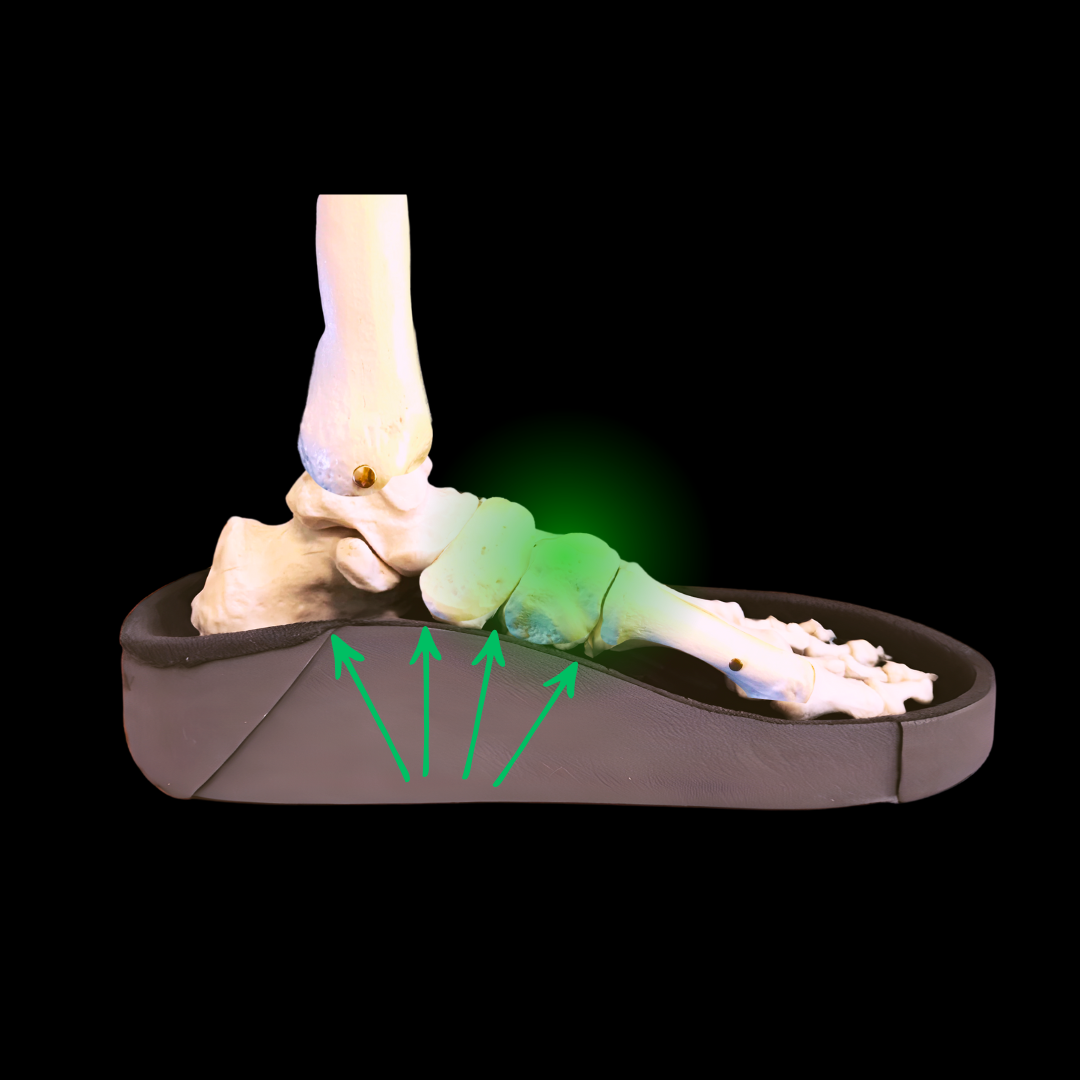
When you alter heel pitch, everything above AND everything in front of the ankle changes its function. The height of your longitudinal arch, transverse (metatarsal) arch, and lateral arch are not fixed anatomical or mechanical constants - they are dynamic, directly contingent on the position of surrounding joints. A heel pitch of even 12 mm shifts the ankle (tibiotalar joint) and subtalar joint position enough to meaningfully change how the orthotic's contours interact with the foot.

|
01
Heel pitch governs arch function
The longitudinal, transverse, and lateral arch heights are all highly correlated to heel elevation - they cannot be optimised independently of the midsole slope. Heel pitch essentially governs the positive or negative influence the ankle has on foot movements.
|
02
Orthotic + midsole are one system
The same orthotic in a flat shoe and a heeled shoe is a different biomechanical intervention. They must be designed together, not independently.
|
03
Rocker placement influences function
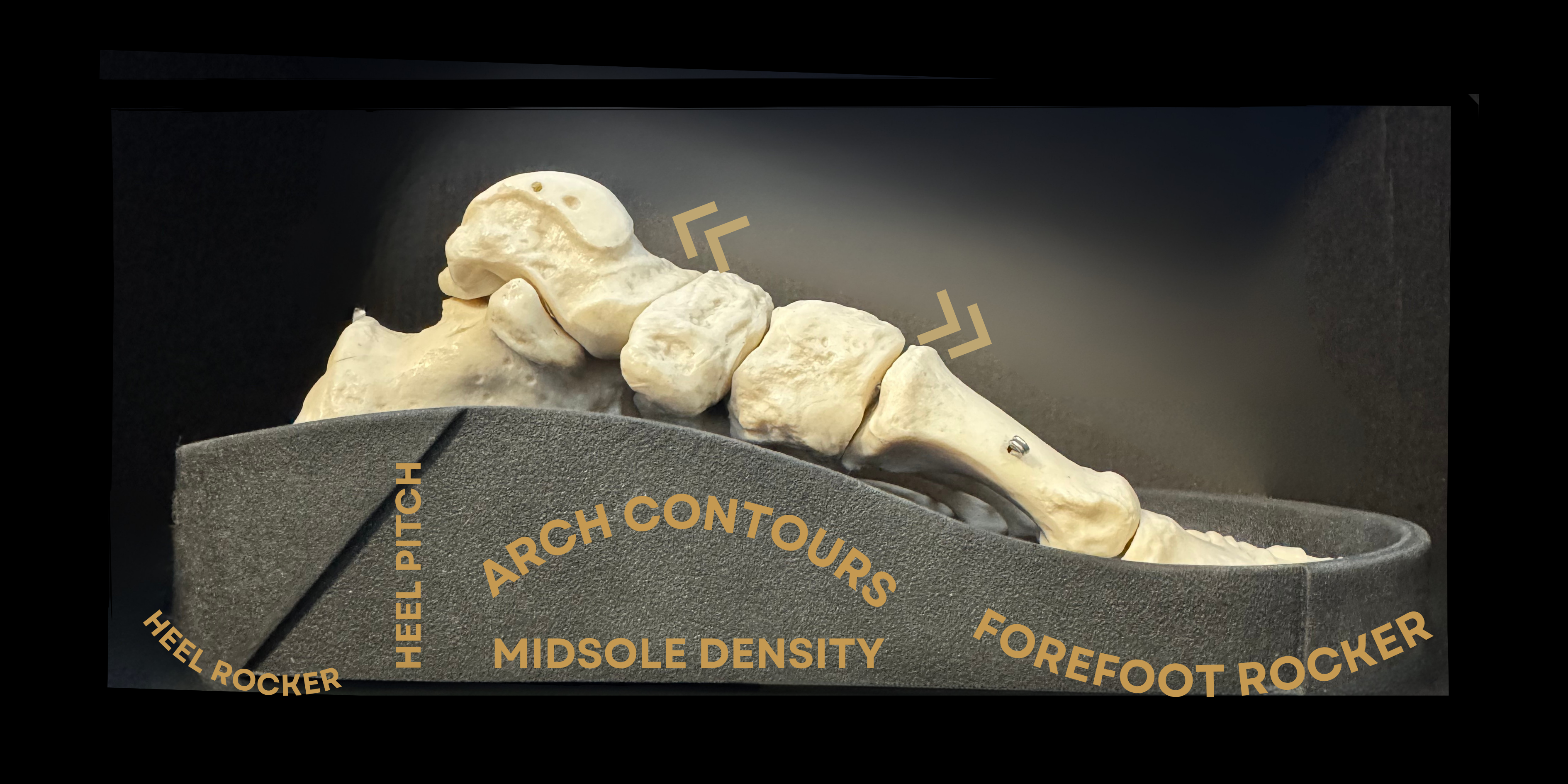
Shoe rocker curves influence the 'balance' of the house on the block. Heel rockers can help with forces at loading phase, a forefoot rocker can help with forces and ease of forward movement at propulsion (the unloading phase).
|
|
Orthotic in a flat shoe
Mismatched terrain?
Using an orthotic in a flat shoe can block necessary forward momentum. Pronation is often the foot attempting to contribute to ankle (dorsi) flexion in mid stance. Block this compensation with an orthotic and some of the benefit of the orthoses is lost - or worse still, the orthotic feels uncomfortable and is not worn. |
Orthotic in a matched heeled shoe
Integrated posture & load
Heel pitch & arch contours need to be selected together to encourage each region of the foot - medial arch, transverse arch/metatarsal heads, lateral column - to couple optimally with the ankle. The right combination of heel and arch contouring together can facilitate smoother, low stress forward movement. |
The ground beneath the house: midsole firmness
But terrain isn't just about slope. It's also about what the ground is made of. A house built on solid rock behaves very differently from one built on soft clay - even if both sites have identical pitch. The ground's firmness determines whether the foundation holds its position under load, or shifts and compresses unevenly.
This brings us to one of the most significant - and largely undiscussed - variables in modern footwear: midsole compliance.
|
Rock / Concrete
Firm midsole
Traditional leather, hard EVA, structured orthotic footwear. Holds position under load. The orthotic performs as designed.
|
Compacted Soil
Moderate foam
Standard EVA, quality running shoes. Predictable compression. Acceptable orthotic performance with appropriate pitch.
|
Soft Clay / Bog
Supercritical foam
PEBA, nitrogen-infused EVA. Engineered for running. Compresses unpredictably under everyday walking mechanics.
|
The "super shoes" that have transformed competitive running are built around supercritical foams engineered to store and return energy at running speeds and cadences. Under a running gait, where ground contact times are brief and forces are high, these foams perform brilliantly.
Under walking mechanics, they are doing something else entirely. At walking speeds, ground contact time is longer and the foot spends more time loading through midstance. The supercritical foams are compressed slowly and unevenly, creating a dynamically shifting platform with every step. The ground is no longer stable. In our analogy: soft clay.
Place an orthotic into a super shoe and the problem compounds. The orthotic's arch contours, designed to sit against a firm and consistent surface, are now riding a foam that deforms differently depending on where load is applied, how fast, and how worn the midsole has become. The house is still there - but it is no longer sitting on a predictable foundation. Its effect on the foot becomes inconsistent and, in some cases, counterproductive.
This doesn't mean super shoes are without merit. For their intended purpose - performance running - they are remarkable. But wearing them as everyday footwear, particularly with orthotics, asks them to perform a role they were never engineered for. And the foot, knee or even hips can pay the difference.
One terrain. One house. One system.
At Anatomicore Labs, the orthotic and the midsole are never designed separately. The heel pitch of the midsole is the terrain specification. Everything above it - the arch heights, the contour depths, the forefoot rocker geometry - is the house designed for that specific block, on that specific slope, on that specific ground.
Our anatomical footbed integrates the orthotic contour directly with the midsole geometry because we recognise that prescribing the arch without specifying the heel pitch leaves the most important variable uncontrolled. The longitudinal arch, the metatarsal transverse arch, and the lateral arch are all calibrated to the pitch beneath them. The rocker - initiating at 66% of total foot length beneath the metatarsal heads - allows for a gentle & natural propulsion without demanding excessive joint range that a stiff or painful foot cannot provide.
"The foot's posture is the product of the entire surface it stands on - not just the part that touches the arch."
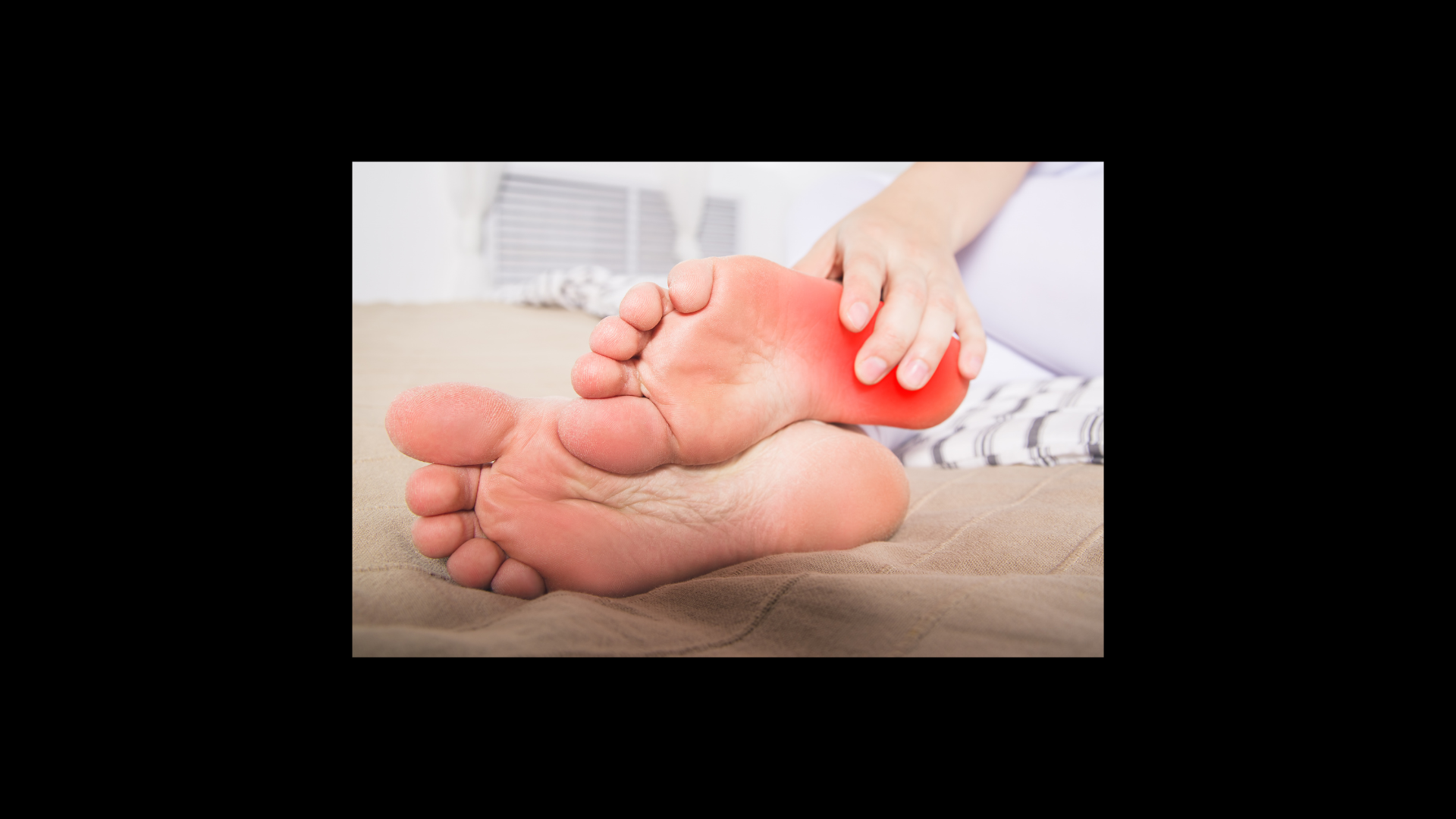
Whether you are managing foot osteoarthritis, plantar heel pain (fasciitis), or lower limb joint loading concerns or simply someone who understands that good foot posture is the foundation of good movement - the principle is the same. Match the house & the terrain together for ultimate 'grand design'.
Podiatric science applied to footwear design. Orthotic sandals engineered for foot posture, function, and lower limb health.